
Before a single word, nine beats. This rhythm has been played in one palace for over five hundred years. Tap, click or hit space each time the ring flashes.
What Is Edo Music? The Royal Drum Behind Highlife — And the New Benin Wave in Afrobeats
You just spelled Benin City with your hands. Every name in this piece — a 1965 gold record, an underground funk scene from the 1970s, and the biggest Nigerian hit of last year — starts in that one city in southern Nigeria.
Read on ↓One state. Several peoples.
Before anything else, a word about the word. "Edo" gets used loosely online, and loose is how you get things wrong.
Edo State, in southern Nigeria, is not one ethnic group. It's home to several: the Edo (Bini) people around Benin City, the Esan (Ishan) people, the Afemai group (which covers the Etsako and Owan peoples), and the Akoko-Edo people in the state's north.1 They're linguistically related — all part of the Edoid language family — but they are not interchangeable, and they don't all share one musical tradition.2
"Edo music", as the term is actually used by musicians, journalists and historians, means something specific: the music of the Edo (Bini) people, built around Benin City — the capital of the historic Benin Kingdom. That's the music this piece is about. Academically, there's even a two-register answer buried in here: "Edo" is technically the broader umbrella (Bini, Esan, Etsako, Owan and more), while "Bini" is the core Benin City group specifically — but in everyday speech, including by Edo/Bini people themselves, the two names are used for the same thing almost all the time.2
Correct. Edo (Bini), Esan, Afemai/Etsako, Owan and the Akoko-Edo group all call Edo State home — related languages, different traditions.
Not quite. Edo State holds several related peoples — Edo (Bini), Esan, Afemai/Etsako, Owan, Akoko-Edo — not just one.
Answer to keep reading
A dance you can't book.
Every genre on a festival poster has a slot. This one doesn't, because it isn't for a festival. It's for a king.
Ekasa is the Benin royal court's ceremonial dance-and-music genre, and it exists for exactly two occasions: the coronation of a new Oba (king) and the funeral of a Queen Mother, called the Iyoba.3 Tradition traces it to the reign of Oba Esigie in the early 1500s, and to his mother Queen Idia, the first Iyoba — said to have brought the dance back from the spirit world to protect her son at his coronation.3
Only men from three hereditary guild communities are allowed to perform it — Ogbelaka, Eguadase and Eben — moving in a circle around drummers who strap their drums (ema) to their own shoulders, alongside gongs (egogo) and gourd rattles (ukuse). Dancers carry hand-carved standards called ukpeko, decorated with mirrors, nails and cut metal, depicting the Oba, the Queen Mother, chiefs — and an elephant and a "bird of prophecy".3
And the songs aren't just music — they're a safety valve. Ekasa performers sing praise to the Oba, but also pointed lines addressed to specific chiefs, even corrupt ones, because while the dance is happening the singers are considered a mouthpiece for the gods, not personally liable for what they say. There's a line for exactly that moment: "it is not us speaking, it is Ekasa that has spoken."3
Before you see the real number, guess. In roughly the last 45 years, how many times has Ekasa actually been performed?
1979 (the coronation of Oba Erediauwa), 1998 (his mother's funeral) and 2016 (the coronation of Oba Ewuare II).3 That's it. No festival calendar, no anniversary show — just those three events, because those are the only two kinds of day Ekasa is for.
Lock a guess to keep reading
Ekasa isn't the only named royal genre. The annual Igue Festival — held every December, over about a week — is when the Oba ritually renews his spiritual authority for the coming year and gives thanks for the one just passed. It traces back to the reign of Oba Ewuare I in the 15th century, and the modern version is actually a consolidation of several smaller festivals, merged by Oba Akenzua II to fit a more practical calendar.4 There's also Olokun dance, the foremost sacred dance tied to worship of the Edo deity of the sea and of wealth, and Ugho, the most popular secular dance style in Benin — the everyday counterpart to all this ceremony.3
One more fact worth knowing before we leave the palace: the historic Benin Kingdom's earthworks and walls, known locally as Iya, have sat on UNESCO's World Heritage Tentative List since 1995 — nominated, never fully inscribed, for over thirty years.5 The famous Benin Bronzes themselves carry no UNESCO status at all; that's a different, more complicated story about an 1897 colonial raid and an ongoing repatriation effort, not a heritage listing.
Build your Edo crate.
Four names took palace rhythm out of the palace and onto record. Pick three for your crate.
Sir Victor Uwaifo
Born in Benin City in 1941, he released "Joromi" in 1965 — widely credited as Africa's first gold disc.6 He built his own double-necked guitar chasing a wider range, developed the "Akwete" rhythm, and later became a university lecturer, a sculptor and Edo State's commissioner for arts and culture. He died in Benin City in August 2021, aged 80.7
Akaba Man
While Uwaifo was Benin's gold-disc star, a rougher, synth-and-guitar scene was building in the same city through the 1970s and 80s — Akaba Man among its key names. It stayed largely unheard outside Edo State for decades, until the German reissue label Analog Africa surfaced it in 2021 as "Edo Funk Explosion".8
Osayomore Joseph
Known as the "Ulele King", a Benin highlife pioneer who sang anti-corruption, government-critical lyrics and paid for it: he was kidnapped in 2017 and wrote about it afterward.9 He died in June 2022, aged 69, mourned across Edo State as one of its boldest voices.
Alhaji Waziri Oshomah
From Auchi in Edo State, he built a style the crate-digging world now calls "Muslim highlife" — recorded through the late 1970s and early 80s, almost unknown outside Nigeria until the US label Luaka Bop (David Byrne's imprint) reissued his catalogue decades later.10
Fill your crate to keep reading
Two from the house
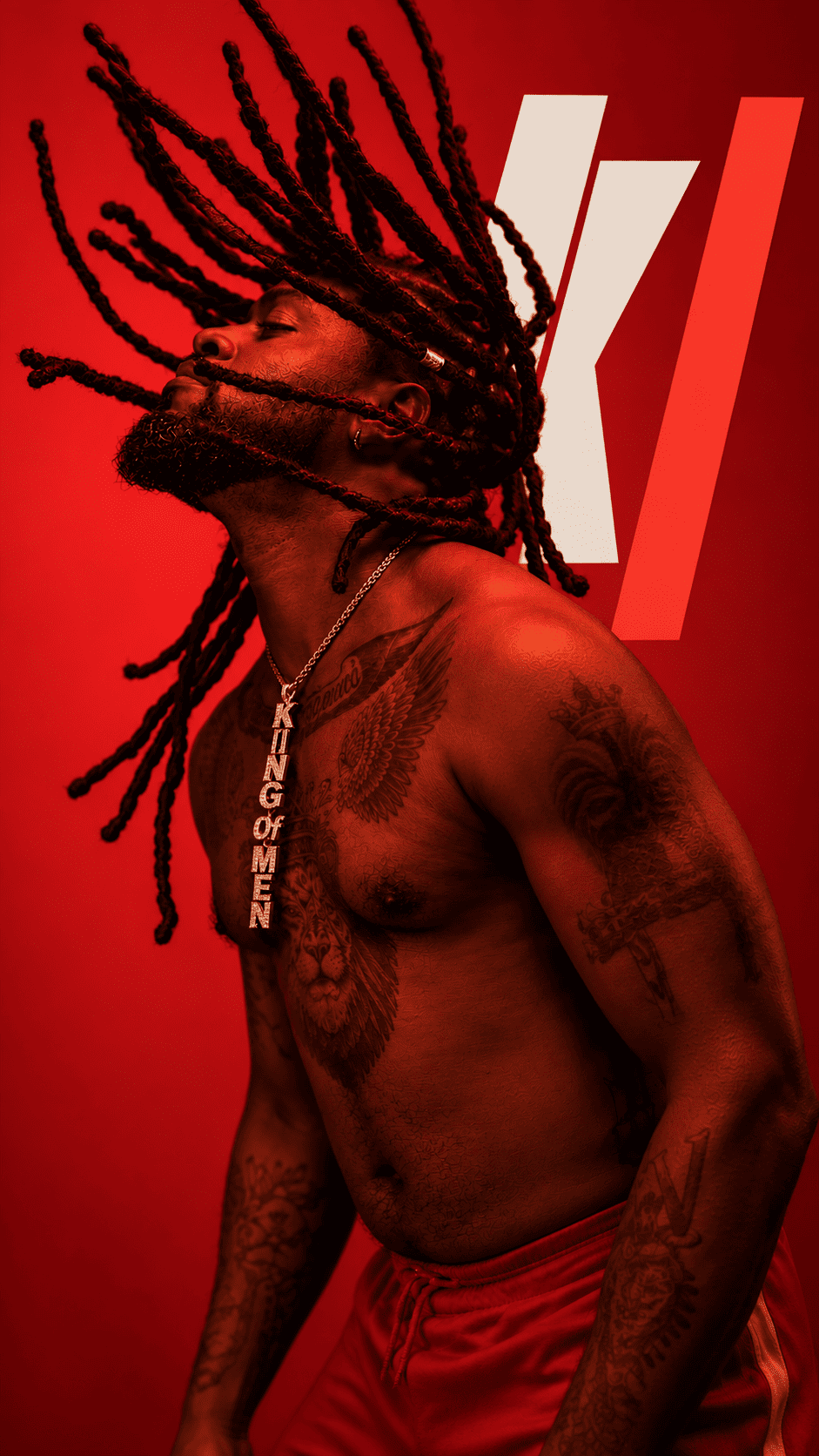
King of Men, the artist and promoter behind this magazine, is part of this same lineage — not metaphorically. His 2023 single "KING OF MEN SALUTE" features a vocalist going by Junior Victor Uwaifo, a name that nods straight at the legend above, alongside Peter the Rock.11 Play it loud.
Father, two sons, one sound.
Akaba Man wasn't a solo act forever. He's the start of an actual musical family.
Akaba Man (born Igunma Igbinigie) is the father. His sons, Famous Akaba and Influence Akaba, carried the name forward into a newer sound — one the community itself describes two ways, interchangeably: "Edo highlife" and "Edo funk". Neither label has fully won; both are correct, depending on who's talking.8
Famous Akaba's "ESUNU", produced by PhilTown Production and released in 2019, had passed a million plays on Audiomack by the time we checked — a real number, from a song most playlists outside Edo State have never heard.12
Influence Akaba carries the same family name and the same scene, with a loyal following of his own around Benin City. Street-level Edo/Afrobeats fandom is still a word-of-mouth world — exact chart numbers for an artist like this are thin outside the community itself, and we'd rather say that plainly than make up a certainty we don't have.
Correct. It's a real family lineage: father Akaba Man, sons Famous Akaba and Influence Akaba.
Not quite — they're brothers. Akaba Man is their father, and the name is a family line, not a coincidence.
Answer to walk the timeline
Palace. Record shop. Your phone.
Walk the lineage, in order. Same city, every stop.
Start at stop 1
Everything after this traces back to one royal rhythm.
On 4 April 2026, Shallipopi — Benin City's biggest current export — walked into the Oba's palace before a hometown show. The Oba asked him for his hit "Laho". He sang it acapella, no band, while members of the royal court joined in.13 Sixty years and one royal request separate "Joromi" from "Laho". Same city, same instinct to put the palace and the pop charts in the same room.
"Benin Boys" (2024) is Rema and Shallipopi — both born in Benin City — making that exact point on record: a joint hometown anthem that racked up a million streams in its first 24 hours.14
Say it properly.
A few Edo words have gone viral inside Afrobeats lately. Here's what they actually mean — not the version that travels best on social media.
Laho literally means "please" or "I beg" — closer to the Nigerian-Pidgin "abeg" than to a phrase about falling. In Shallipopi's song, the full line is "my account is dry, please" — a hustler's plea for help, usually about money, not literally about falling down.15
Aza is an older Edo word for a storehouse or treasury — repurposed in today's slang to mean a bank account. "My Aza is dry" is street shorthand for "my account is empty."16
And one correction worth making cleanly: "Evian", from Shallipopi's "Elon Musk", is sometimes written up online as an Edo slang word. It isn't. Shallipopi has said directly, on record, that it's simply his own family name.17 Good rule of thumb: when an artist tells you what a word means in their own interview, that beats a music blog's guess.
Uzama isn't just a cool word either — it names something exact.
Correct. The Uzama N'Ihinron are the seven hereditary chiefs who install — and can ritually challenge — the Oba. It's a fixed set of titles tied to named lineages, not a free-floating compliment.18
Not quite. Uzama names the seven hereditary kingmaker chiefs of Benin — a specific, centuries-old institution, not a generic word.18
Answer to see the rest
Which makes Shallipopi's own adopted title land differently once you know it: his real name is Crown Uzama, and press now half-jokingly calls him "Crown Uzama, if we're calling royalty by name."19 A street name borrowing straight from a royal institution — that's the Benin wave in one detail.
"Ayra Starr is from Edo State" — no, she isn't.
It's a common mix-up online, and an understandable one: Ayra Starr is frequently and wrongly tagged "Edo". She was actually born in Cotonou, in the Republic of Benin — a different country that just happens to share a name with Benin City — and her family is from Kwara State, Nigeria.20 Two different "Benins." Worth knowing before you repeat it.
Three names to say early.
Shallipopi and Rema are already huge. These three are the next wave out of the same city — and worth knowing before everyone else does.
Mavo
Born Oseremen Marvin Ukanigbe in Ekpoma, Edo State. He invented his own slang style he calls "Bur Bur music", complete with a published "Bur Bur Dictionary". Billboard named him African Rookie of the Month in late 2025, and his "Escaladizzy" remix — with Ayra Starr, Shallipopi and Zlatan — has passed a million streams.21
Famous Pluto
Born Osahon Grandeur Uzama in Benin City — yes, Shallipopi's actual younger brother. Signed to Plutomania Records in 2025, performing his own self-coined "Afro-Pluto" style alongside brother Zerrydl.22
Culture writers have started describing a "Benin sound resurgence" — Rema, Shallipopi, Famous Pluto, Mavo and others, sharing a hometown, a set of slang words and a trap-leaning production style.16 It isn't an official genre name yet, the way "Amapiano" is. But give it time.
Your Edo music passport.
You didn't just read this. You played it. Here's the record.
- Timing
- Skipped the beat
- Edo or Bini?
- —
- Ekasa guess
- —
- Your crate
- —
- Akaba family
- —
- Uzama
- —
Edo music isn't a sub-genre of Afrobeats. It's one of the rooms Afrobeats was built from — a line running from a 500-year-old royal dance through a 1965 gold record, a lost funk scene, and straight into this year's biggest Nigerian hit. Next in this knowledge base: the full Akaba dynasty story, and a dedicated profile on Sir Victor Uwaifo. Read our companion piece, "What Is Afrobeats?" →
Edo music, in six questions
What is Edo music?
Edo music is the traditional and modern music of the Edo (Bini) people of Benin City, Nigeria — from the centuries-old royal court genre Ekasa, through 20th-century Edo highlife (Sir Victor Uwaifo, the Akaba family), to the current wave of Benin City-born Afrobeats stars like Shallipopi, Rema, Mavo and Famous Pluto.
What's the difference between "Edo" and "Bini"?
They largely overlap in everyday use. Technically, "Edo" is the broader ethnic umbrella covering Bini, Esan, Etsako/Afemai and Owan peoples; "Bini" is specifically the core Benin City group. Most people, including Edo/Bini people themselves, use the two names interchangeably for "the people of Benin City."2
What is Ekasa?
Ekasa is the Benin royal court's ceremonial dance-and-music genre, performed only at the coronation of a new Oba or the funeral of a Queen Mother. It's been performed three times since 1979: 1979, 1998 and 2016.3
Who is considered the father of modern Edo music?
Sir Victor Uwaifo (1941–2021) is the most widely credited figure — his 1965 single "Joromi" is called Africa's first gold disc, and he's credited with bringing Edo rhythms into mainstream highlife.67
What does "Laho" really mean?
"Laho" is Edo for "please" or "I beg" — in Shallipopi's hit, a plea for help with money, not literally a phrase about falling.15
Where can I hear Edo-rooted Afrobeats live in Munich?
King of Men plans Afrobeats and Edo-diaspora nights and books African and diaspora artists for clubs, venues and private events. Plan a night with us.
Sources
All links checked on 20 October 2026. Streaming and play counts are snapshots and change daily. Some dates and figures in this piece carry open questions in our own research register (for example, the exact spelling "Ekasa" vs "Ekassa", and the reigning Oba's precise regnal number, which even leading sources don't agree on) — we've favoured the strongest single source we could find and left contested details out rather than guess.
- About Edo — Edo State Government
- Austin Emielu, "Ethnic and Regional Identities in Nigerian Popular Music: A Special Focus on the Edo" — African Music journal, ILAM/Rhodes University, 2013
- Josephine O. Abbe & Jean Borgatti, "Ekasa: History, Image, Music and Dance" — University of Benin / Clark University
- Igue festival — Wikipedia (citing Ryder 1981, Egharevba 1960, Osahue & Omoera 2008)
- Benin Iya / Sungbo's Eredo — UNESCO World Heritage Tentative Lists
- Victor Uwaifo — Wikipedia
- Great lyricist Victor Uwaifo, 'Guitar Boy', dies at 80 — The Guardian Nigeria, Aug 2021
- Analog Africa — Edo Funk Explosion — PAM (Pan African Music)
- In the Evil Forest: a Nigerian activist and musician sings of his kidnapping — South Carolina Public Radio / NPR
- Alhaji Waziri Oshomah — Luaka Bop
- King of Men — "KING OF MEN SALUTE" on Audiomack
- Famous Akaba — "ESUNU" on Audiomack
- Oba of Benin requests "Laho" as Shallipopi visits palace — Premium Times, Apr 2026
- Rema shares eye-catching "Benin Boys" video — Clash Music
- Music review: Shallipopi's "Laho" is hustler's anthem drenched in street reality — Premium Times
- The resurgence of Benin sound — Africa Is a Country, Jun 2025
- Shallipopi: "Evian is my family name" — TheCable Lifestyle
- Analysis of the Uzama Titles — edoworld.net, corroborated by The Hierarchy at Court — Art Institute of Chicago
- Shallipopi — Wikipedia
- Ayra Starr — Wikipedia
- Mavo (musician) — Wikipedia
- Famous Pluto — Wikipedia